

FG, NESUG Rally Stakeholders to Unlock Green Finance, Strengthen Environmental Governance and Create Jobs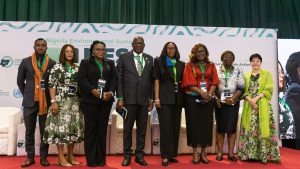
The Federal Government of Nigeria has reaffirmed its commitment to leveraging green finance, innovative partnerships, and sustainable investments to address climate change, strengthen environmental governance, create jobs, and accelerate economic growth.
This commitment was reiterated at the Nigeria Environmental Summit (NESt 2026) held on 17–18 June 2026 in Abuja under the theme: “Unlocking Nigeria’s Green Economy: Driving Climate Action and Strengthening Environmental Governance.”
Speaking at the Summit, the Honourable Minister of Environment, Mallam Balarabe Abbas Lawal, represented by the Permanent Secretary, Dr. Mahmud Adam Kambari, stated that Nigeria must urgently position itself to benefit from emerging climate and green investment opportunities.
According to the Minister, climate funds, carbon markets, public-private partnerships, blended finance mechanisms, renewable energy, ecosystem restoration, sustainable agriculture, and waste-to-wealth initiatives present significant opportunities for environmental sustainability, economic transformation, and job creation.
“We must unlock green finance opportunities and strengthen environmental governance through policy reforms, regulatory enforcement, accountability, stakeholder engagement, and strategic partnerships that will accelerate Nigeria’s transition to a climate-resilient and sustainable economy,” he stated.
The Minister noted that climate change continues to manifest through flooding, drought, coastal erosion, biodiversity loss, pollution, and increasing pressure on ecosystems and livelihoods, emphasizing that innovative financing mechanisms are critical to achieving Nigeria’s environmental and development goals.
He commended the Nigerian Environmental Summit Group (NESUG) for providing a credible national platform that convenes government institutions, development partners, investors, academia, civil society organizations, and the private sector to advance practical and scalable environmental solutions.
Also speaking at the event, Dr. Mya Ngon, Cluster Lead, Disease Control, World Health Organization (WHO) Nigeria, emphasized the importance of placing health at the centre of climate and environmental decision-making.
She highlighted findings from Nigeria’s 2024 Climate and Health Vulnerability and Adaptation Assessment, which revealed that climate-related factors could account for up to 21 percent of the country’s disease burden, underscoring the need to unlock the full potential of Nigeria’s green economy while protecting public health.
In her welcome remarks, the Executive Secretary of the Nigerian Environmental Summit Group (NESUG), Chem. Rita Michael-Ojo, called for stronger collaboration among governments, businesses, development partners, communities, and citizens.
“No single institution can solve Nigeria’s environmental challenges alone. NESt represents one platform and one conversation where stakeholders unite to build a greener, healthier, and more prosperous future for Nigeria,” she stated.
NESUG’s growing influence as one of Africa’s largest public-private sustainability platforms, bringing together more than 650,000 environmental, health, safety, sustainability and development professionals, over 12,300 corporate and MSME actors, and more than 1,000 leaders and institutions to drive policy reforms, investment partnerships, and community-led environmental action.
During his presentation, the Chairman of the NESt 2026 multi-sectoral Implementation Team and Global Environmental Health Expert, Dr. Edwin Isotu Edeh, described the Summit as a national call to action to transform environmental challenges into opportunities for prosperity, resilience, and inclusive growth.
“Environmental sustainability is no longer an environmental issue alone; it is an economic, health, investment, and national security imperative. Nigeria cannot achieve lasting prosperity on a degraded environment. The future belongs to nations that convert climate risks into jobs, investments, innovation, and resilient communities,” he said.
“Nigeria faces climate threats on multiple fronts simultaneously: floods that kill hundreds per year, air pollution levels significantly above WHO recommendations, a disproportionate burden of malaria, and substantial gaps in climate-health financing. Chemicals and pesticides in the food chain, open defecation, poor WASH services, vector-borne disease outbreaks, inadequate waste management and oil and gas pollution.
Attended by over 1450 Hybrid participants, the one conversation stressed the need for collective efforts to unlocking Nigeria’s estimated £20 billion green economy potential while strengthening environmental governance, accountability, and sustainable development.
A major highlight of the Summit was the Nigeria Environmental Sustainability Merit Awards (NESMA), where distinguished environmental leaders were honoured for their outstanding contributions to environmental sustainability, governance, and national development.
Award recipients included Prof. Oladele Osibanjo, Dr. (Mrs.) Ngeri Benebo, Chief Dr. Iganya Joy Agene, Sanitarian Augustine Ebisike, Rev. Nnimmo Bassey, and Ms. Amina J. Mohammed. States including Lagos, Akwa Ibom, and Jigawa were also recognized for excellence in environmental sustainability and governance.
NESt 2026 featured high-level keynote presentations, technical sessions, policy dialogues, climate-health discussions, community environmental dialogues, youth innovation showcases, project and art exhibitions, cultural performances, deal-room engagements, and strategic networking sessions aimed at unlocking green investments and accelerating climate action.
The Summit attracted senior government officials, development partners, regulatory agencies, academia, private sector leaders, environmental professionals, youth groups, corps members, and students. Notable dignitaries included the Senior Special Assistant to the President on Public Health, Mrs. Uju Rochas-Anwukah; Dr. Mutiu Sonmonu; Directors-General; Commissioners of Environment; development partners; regulatory officials, Nigerian Environmental Sustainability Green Ambassador and Nollywood actress, Matilda Lambert; and industry leaders led by Lafarge Africa Plc.
The Federal Ministry of Environment reaffirmed its commitment to supporting the implementation of the Summit’s outcomes and working with stakeholders to advance climate action, environmental governance, environmental health, and sustainable development across Nigeria.
